
Lipids and Lipid Derivatives


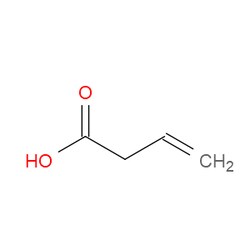
Aobchem But-3-enoic acid | ≥95% | CAS 625-38-7 | C4H6O2 | 100g
But-3-enoic acid | ≥95% | CAS 625-38-7 | C4H6O2 | 100g


Apexbio Technology LLC 2-hexyl-4-Pentynoic Acid 96017-59-3 1g
2-hexyl-4-Pentynoic Acid (CAS 96017-59-3) is a valproic acid derivative that functions as a histone deacetylase (HDAC) inhibitor exhibiting an IC50 of 13 M HDACs regulate gene expression by removing acetyl groups from histones promoting chromatin condensation and transcriptional repression In cerebellar granule cells 2-hexyl-4-Pentynoic Acid increases acetylated histone H3 levels in a dose-dependent manner and enhances HSP70-1a/1b mRNA expression At 50 100 M it significantly elevates Ac-H3 levels beyond those achieved with valproic acid and provides complete protection against glutamate-induced cell death indicating its utility in neuroprotection and epigenetic research
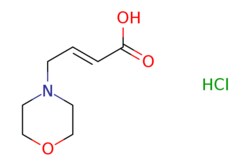
eMolecules 1419865-05-6 | (E)-4-morpholinobut-2-enoic acid hydrochloride | Pharmablock | MFCD27920360 | 207.650 | C8H14ClNO3 | 97.000 | Cl.OC(=O)\C=C\CN1CCOCC1 | 1g | 731745375
(E)-4-morpholinobut-2-enoic acid hydrochloride | Pharmablock | 1419865-05-6 | MFCD27920360 | 207.650 | C8H14ClNO3 | 97.000 | Cl.OC(=O)\C=C\CN1CCOCC1 | 1g | 731745375
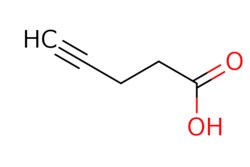
eMolecules 4-Pentynoic acid | Combi-BlocksMFCD00004407 | 98.101 | C5H6O2 | 97.000 | OC(=O)CCC#C | 5g | 117558661
4-Pentynoic acid | Combi-BlocksMFCD00004407 | 98.101 | C5H6O2 | 97.000 | OC(=O)CCC#C | 5g | 117558661
eMolecules 11032-49-8 | Vitamin K2 | AA Blocks LLC | MFCD00079646 | 444.659 | C31H40O2 | 0.000 | CC(C)=CCC\C(C)=C\CC\C(C)=C\CC\C(C)=C\CC1=C(C)C(=O)c2ccccc2C1=O | 250mg | 925048035
Vitamin K2 | AA Blocks LLC | 11032-49-8 | MFCD00079646 | 444.659 | C31H40O2 | 0.000 | CC(C)=CCC\C(C)=C\CC\C(C)=C\CC\C(C)=C\CC1=C(C)C(=O)c2ccccc2C1=O | 250mg | 925048035

Cayman Chemical Phytol, Purity: ≥85% (mixture of isomers), CAS: 7541-49-3, 100 g
A degradation product of chlorophyll that is converted to phytanic acid, which can accumulate to toxic levels in a number of metabolic disorders; activates RXRs (Kis range from 2.3-67.2 µM) and promotes the activity of PPAR/RXR heterodimers

Apexbio Technology LLC Bazedoxifene acetate 198481-33-3 5mg
Bazedoxifene acetate (CAS 198481-33-3) is a selective estrogen receptor modulator (SERM) targeting estrogen receptors (ER) It is designed to modulate ER activity thereby regulating estrogen-dependent cellular pathways Bazedoxifene acetate exerts its biological activity primarily through tissue-specific agonism and antagonism of ER In in vitro studies Bazedoxifene acetate demonstrates receptor modulation with reported affinities (Ki) of 26 nM for ER and 99 nM for ER Based on these pharmacological properties Bazedoxifene acetate holds research potential in osteoporosis and bone metabolism studies as well as in investigations of hormone-responsive cellular mechanisms and pancreatic cancer

Apexbio Technology LLC Bazedoxifene acetate 198481-33-3 10mg
Bazedoxifene acetate (CAS 198481-33-3) is a selective estrogen receptor modulator (SERM) targeting estrogen receptors (ER) It is designed to modulate ER activity thereby regulating estrogen-dependent cellular pathways Bazedoxifene acetate exerts its biological activity primarily through tissue-specific agonism and antagonism of ER In in vitro studies Bazedoxifene acetate demonstrates receptor modulation with reported affinities (Ki) of 26 nM for ER and 99 nM for ER Based on these pharmacological properties Bazedoxifene acetate holds research potential in osteoporosis and bone metabolism studies as well as in investigations of hormone-responsive cellular mechanisms and pancreatic cancer

Apexbio Technology LLC Estrone 53-16-7 5g
Estrone (53-16-7) is a naturally occurring estrogen that modulates estrogen receptor-mediated signaling pathways It is primarily synthesized in ovarian and adipose tissues and participates in the regulation of estrogen-dependent cellular and physiological processes Estrone exerts its biological activity primarily through binding and activating estrogen receptors Experimental model activity type and key metric (IC50/EC50) are not specified Based on these pharmacological properties estrone holds research potential in studies of estrogen receptor activation reproductive endocrinology menopausal hormone transitions and estrogen-dependent signaling pathways and diseases
Sigma Aldrich Fine Chemicals Biosciences Octanoic acid 98 fG
Octanoic acid is a fatty acid mainly found in butter edible oils and milk of various species.


Cayman Chemical (±)-Nicotine-d3, Purity: ≥99% deuterated forms (d1-d3), CAS: 69980-24-1, 5 mg
An internal standard for the quantification of (±)-nicotine by GC- or LC-MS

Medchemexpress LLC Antioxidant 1010 | 6683-19-8 | 98.0% | 1177.66 | 25 G

Antioxidant 1010 exhibits antioxidant efficacy in plastic, rubber, and synthetic fiber.
- Exhibits antioxidant efficacy in plastic, rubber, and synthetic fiber.

Medchemexpress LLC Antioxidant 1010 | 6683-19-8 | 98.0% | 1177.66 | 100 G
Antioxidant 1010 (Irganox 1010; AT1010) exhibits antioxidant efficacy in plastic, rubber and synthetic fiber.
- Exhibits antioxidant efficacy
- Suitable for plastic applications
- Suitable for rubber applications
- Suitable for synthetic fiber applications

Medchemexpress LLC Glyceryl 1-monooctanoate | 502-54-5 | 99.0% | 218.29 | 5 MG
Glyceryl 1-monooctanoate is a glycerol monolaurate derivative and a broad-spectrum antimicrobial. It suppresses the growth of pathogenic yeast and both Gram-positive and Gram-negative bacteria. This makes it suitable for various laboratory applications.
- Broad-spectrum antimicrobial activity.
- Suppresses the growth of pathogenic yeast (Candida albicans and Candida parapsilosis).
- Suppresses the growth of Gram-positive bacteria (Staphylococcus aureus).
- Suppresses the growth of Gram-negative bacteria (Escherichia coli, Klebsiella pneumoniae).
- Antifungal activity against saprophytic fungi (Aspergillus niger, Penicillium roqueforti, Penicillium jensenii, Alternaria sp., Phoma sp.).
- Antifungal activity against pathogenic fungi (Trichophyton mentagrophytes and Trichophyton rubrum).